This morning, I heard spring arriving in a thunderstorm, and saw it in the small purple buds of henbit in my lawn. Outside my open window, I can hear a raucous assembly of birds calling for their mates in the bare branches of the hackberry trees. It’s only February- we’re still technically in the midst of winter. But nature rewards courage, and these moments of renewal are both tender and brave.
Like nature, our human experience moves us- ready or not- through cycles of renewal and loss. We respond as any other creatures do, trying as best we can not to succumb to the freezing of our heart when we witness the unforgiving harshness of the world.
We can’t navigate this life without a certain amount of pain and wounding. We find ourselves exiled from a place of belonging, separated from those we thought we could trust.
I have both dealt, and been dealt this pain myself.
When we become aware that we’ve been harmed, we should always take appropriate actions to protect ourselves from further injury.
Anger serves as an alarm bell within us to let us know that a line has been crossed, and gives us a burst of energy in order to bring ourselves into a place of safety.
But anger that isn’t cleared and turned into healing action turns into resentment, like a winter that never ends.
Resentment is a signal to our larger self that some part of our heart is stuck in a cycle of harm. We find ourselves frequently reliving the experience of being harmed and entertaining fantasies of revenge.
Resentment steals the precious gift of our attention away from the present moment. We find ourselves distracted when we’re with our loved ones, unable to be fully there for them, because part of us is somewhere else.
We can feel the effects in our bodies- when we live in resentment, we may lack energy for doing what we love, because we’ve overloaded our body with stress on a continual basis.
Resentment can eventually change us into someone we never meant to be. It leads us to shrink the people in our lives into small boxes—we reduce them to the labels: thief, liar, cheater, fraud, etc.
And, we undermine our own identity when we begin to think of ourselves primarily as a victim.
The voice of resentment will continue to get louder and more demanding until we acknowledge it’s presence and take compassionate action on our own behalf to stop to the cycle of harm. We eventually come to a point when we have to decide how we’re going to navigate our current experience of our past hurt. We begin to choose, on a daily basis, to stay with smallness of resentment, or to open to the potential that is forgiveness.
I don’t personally feel that we have an moral responsibility to forgive. That choice falls in the realm of inherent human agency and personal freedom.
It’s much like love, it can’t be forced- in fact, to try to force it just makes it all the more difficult to do. But we can, like the softening ground of late winter, begin to make a way for the possibility of forgiveness.
Forgiveness doesn't mean we agree with those who harmed us, or that we condone their actions. It does not need to allow them access to us. We can forgive someone and still hold them accountable for their choices. We’re still able to make wise boundaries to protect ourselves, even as we forgive.
Forgiveness means that we have enough compassion for ourselves to stop reliving the cycle of harm. It means we stop trying to control others, we accept the reality of who we all are, and we can wish them wellbeing.
Forgiveness doesn't happen in one final, sweeping moment. It's a daily practice. It requires mindful presence and fierce courage to face our memories of harm, and to treat them with compassion as we heal and let go.
It means accepting the reality of this moment, with all it’s joys and griefs merging together into the kaleidoscope that is our vast and beautiful human experience. Just as Nature composts what has come before and turns it into new life and growth, so may forgiveness bring us warmth and life back to our hearts this spring.
A note from me, to you:
For the wounds I’ve dealt to you, dear one, I offer you the Ho'oponopono prayer:
I’m sorry. Please forgive me. Thank you. I love you.
For the wounds I've dealt, I also pray the Buddhist Prayer of Forgiveness:
"If I have harmed anyone in any way—either knowingly or unknowingly through my own confusions—I ask their forgiveness.
If anyone has harmed me in any way—either knowingly or unknowingly through their own confusions—I forgive them.
And if there is a situation I am not yet able to forgive, I forgive myself for that.
For all the ways that I harm myself, negate, doubt, belittle myself, judge, or am unkind to myself through my own confusions, I forgive myself."
For the wounds I’ve dealt, I pray as Christ once did:
Forgive us our trespasses, as we forgive those who trespass against us.
For the wounds I’ve received from you, dear one, the truth is that they’re healed and forgiven. I would not be the person I am today without your presence in my life. I thank you for the invitation to make the world larger and more beautiful as I forgive. I love and accept where I am in my life, and all that came before this moment is made perfect by the truth that I’m grateful to be here, now, exactly as I am.
Quotes:
•
"You can't forgive without loving. And I don't mean sentimentality. I don't mean mush. I mean having enough courage to stand up and say, 'I forgive. I'm finished with it'." —Maya Angelou
•
“Selfishness must always be forgiven you know, because there is no hope of a cure.” —Jane Austen
•
"As I walked out the door toward the gate that would lead to my freedom, I knew if I didn't leave my bitterness and hatred behind, I'd still be in prison." —Nelson Mandala
•
"Forgiveness does not mean ignoring what has been done or putting a false label on an evil act. It means, rather, that the evil act no longer remains as a barrier to the relationship. Forgiveness is a catalyst creating the atmosphere necessary for a fresh start and a new beginning." —Martin Luther King Jr.
•
“For me, forgiveness and compassion are always linked: how do we hold people accountable for wrongdoing and yet at the same time remain in touch with their humanity enough to believe in their capacity to be transformed?” —Bell Hooks
Music:


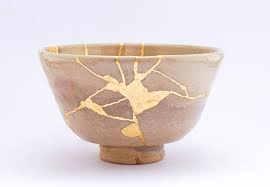
And lastly, forgiveness as a work of art:
Kintsugi is the Japanese art of repairing broken pottery with gold, embracing the object's history and making it more beautiful through its imperfections.