


When the year was new and winter days were short, it was easy for me to imagine the myriad possibilities that warmer weather and longer days would bring. I spent the season of spring planting new projects and new dreams, which are steadily growing and coming to fruition. Not only that, but new possibilities and bids for my attention continue to spring up, like elm seedlings in the gaps of pavement or volunteer tomato plants in a compost heap.
But nature imposes much needed limitations on growth, and under the sweltering heat and humidity of the Oklahoma summer, the energy and imagination that possessed me earlier in the year are in shorter supply. It just isn’t possible to follow every potential creative venture. Choices need to be made.
The need for wise discernment in how we spend our energy isn’t confined to our own human endeavors, nor are we the best examples in nature of how to use the resources given to us in a sustainable way. As a species, we seem to be in a race with each other to determine who will use up our planet’s finite resources first—determined to position ourselves at the top of a fast-toppling pyramid of power and imagined control of our environment. But adaptability to the environment, not illusions of control, determines a species’ success.
For a deeper, older wisdom, we need to widen our perspective to include more than just ourselves and look to our non-human family, observing their strategies for eons of sustained flourishing.
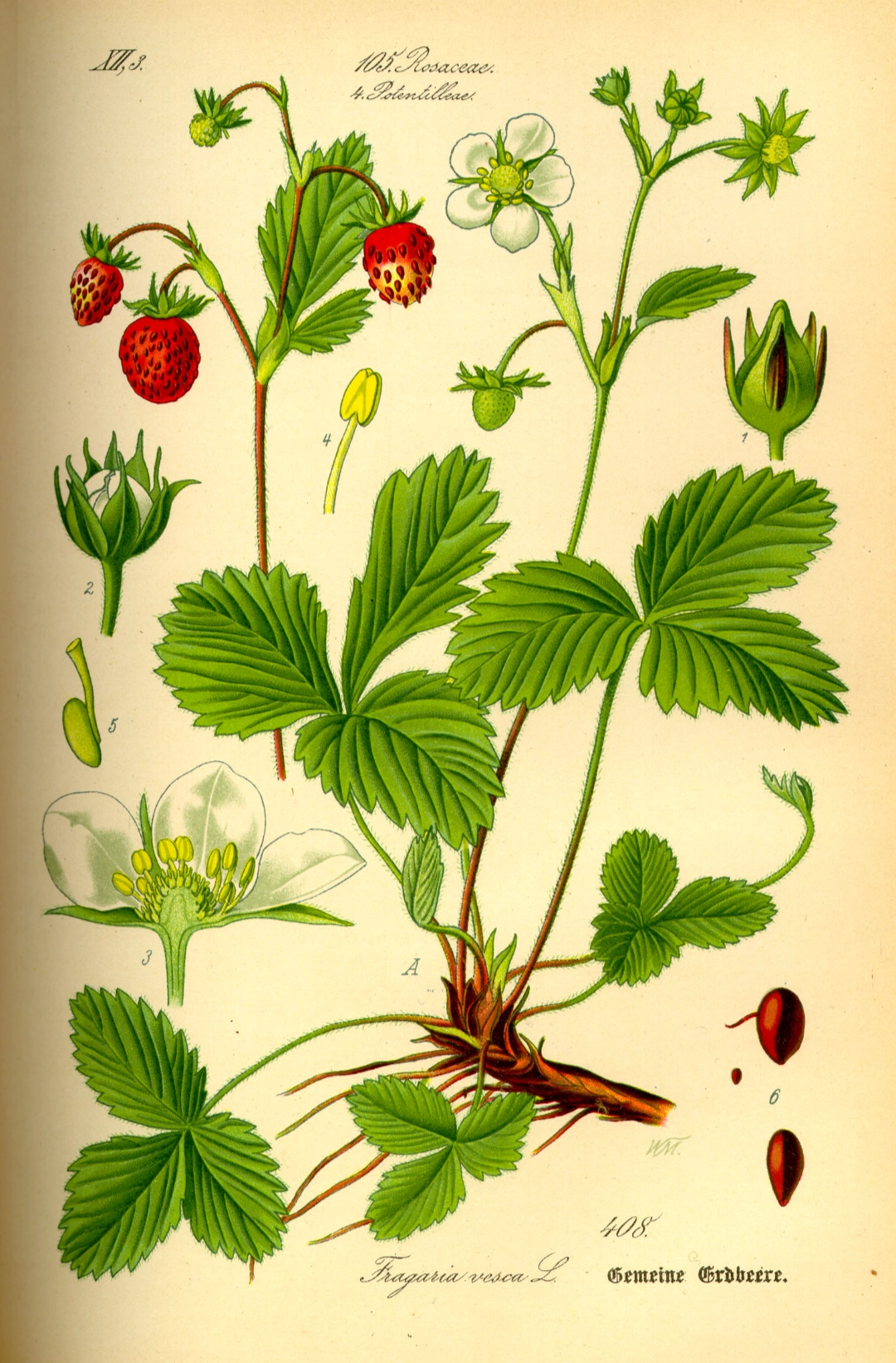
As I write, the June moon is ripening into fullness, and some of this moon’s Indigenous names translate into variations of “Strawberry Moon,” “Moon When the Berries Ripen,” or names with other references to berry harvests.
Dr. Robin Wall Kimmerer, a botanist, professor, author, and member of the Potawatomi nation explains the gift of strawberries this way:
“Strawberries first shaped my view of a world full of gifts simply scattered at your feet. A gift comes to you through no action of your own, free, having moved toward you without your beckoning… Your only role is to be open-eyed and present.
The plant has in fact been up all night assembling little packets of sugar and seeds and fragrance and color, because when it does so its evolutionary fitness is increased. When it is successful in enticing an animal such as me to disperse its fruit, its genes for making yumminess are passed on to ensuing generations with a higher frequency than those of the plant whose berries were inferior. The berries made by the plant shape the behaviors of the dispersers and have adaptive consequences…The relationship of gratitude and reciprocity thus developed can increase the evolutionary fitness of both plant and animal.”
From “Braiding Sweetgrass: Indigenous Wisdom, Scientific Knowledge, and the Teachings of Plants” by Robin Wall Kimmerer
And so, the plant puts its precious energy into a gift that doesn’t stop with the receiver—instead, it invites others into a creative process of mutual flourishing. The gift is given freely to those who appreciate it, receive it, and pass it on in a continual, adaptive cycle that nourishes the surrounding ecological communities.
There is wisdom in this approach- an example to us human animals of how to use our interior, personal energy in more sustainable ways that align with our deepest intentions.
We can offer our gifts of time and action to those who appreciate and redistribute those gifts in ways that we can’t do alone. It is a continual process of gifting that withstands the passage of time and changes with the environment.
In spiritual direction, we use gentle inquiry as a method for personal discernment. I’ll leave you with a few questions to consider, but I invite you to also create your own.
In the slow heat of summer, as in the frantic busyness of our lives, we can ask ourselves:
What is it that we truly want to cultivate in ourselves and in the world?
Who is ready and waiting to appreciate our creative gifts, and how will they redistribute those gifts?
How will this act of giving sustain us and others over time?
How can we spend our energy in a way that doesn’t deplete us but makes room for future flourishing?